Translate

Sunday, 24 September 2017

KURANGKAN KOS PENGURUSAN PENDIDIKAN

Kita terlalu banyak berbelanja menguruskan pendidikan yang sebenarnya tidak kos effektif

Menguruskan sesebuah institusi pendidikan memerlukan perbelanjaan yang tinggi. Kos penggajian atau upah kerja adalah perkara wajib yang tidak dapat dielakkan. Kos ini meningkat setiap tahun kerana setiap kakitangan awam akan menikmati kenaikan gaji mengikut kekananan atau kenaikan pangkat. Kos-kos lain yang tidak kurang juga pentingnya ialah bil-bil elektrik dan air yang mencecah ratusan ribu ringgit setiap tahun. Belanja penggunaan kertas dan penyenggaraan alatan percetakan dan komputer juga mencatat perbelanjaan hingga puluhan ribu ringgit setahun.

Kita boleh mengelak dari berbelanja berlebihan dengan beberapa strategi:

a. Elakkan pembinaan bilik-bilik tertentu di dalam pejabat supaya penyaman udara boleh di gunakan secara yang lebih optimum. Maksudnya bilik-bilik boleh digantikan dengan pembahagi-pembahagi (partitions) setinggi empat kaki. Hanya beberapa unit penyaman udara boleh digunakan untuk menggantikan jumlah penyaman-penyaman udara yang kecil dalam setiap bilik.

Contohnya:

Jika sebuah pejabat mempunyai sejumlah penyaman udara yang mempunyai 11 kuasa kuda iaitu 11,000 wat. Perbelanjaan untuk penyaman udara sahaja ialah;

11(watthour) x 0.4 (RM) x 8 (jam)  =                                                                       RM35.20 sehari.

Jumlah lampu di pejabat misalnya 20 buah dan kosnya ialah:

20 x 0.02 ( kilowatt) x 0.4 (RM) x 8 (jam)  =                                                            RM1.28  sehari.

Jumlah penggunaan kuasa di dalam pejabat sehari ialah                                          RM36.48 sehari.

Jumlah penggunaan kuasa di dalam pejabat sebulan ialah   RM36.48 x 30 =        RM1,094.40        

Lagi contoh:

Sebuah kelas mempunyai 12 lampu (20 watt setiap satu) dan 3 kipas angin (40 watt setiap satu)
Jadi setiap kelas akan menggunakan kuasa sebanyak:

12 x 0.02 (kilowatt) x 8 (jam) x 0.4 (RM seunit)   =                                                 RM0.77
3   x 0.04 (kilowatt) x 8 (jam) x 0.4 (RM seunit)   =                                                 RM0.38

Jumlah penggunaan kuasa di dalam sebuah kelas sehari ialah                                  RM1.15

Jumlah penggunaan kuasa di dalam 32 buah kelas sehari ialah  RM1.15 x 32 =      RM36.80

Jumlah penggunaan kuasa di dalam 32 kelas sebulan ialah    RM36.80 x 30 =      RM1,104.00

Jadi kos untuk menguruskan sebuah pejabat ialah 32 kali ganda menguruskan sebuah kelas!

Monday, 7 August 2017

Transformasi Sekolah-sekolah


Pengupayaan sekolah sebagai institusi yang mempunyai otonomi

Oleh: Mohd Rosli bin Saidin (15 Januari 2017)

Sebagai seorang pendidik, sepanjang cuti sekolah yang lalu saya telah banyak berfikir tentang peranan sekolah sebagai sebuah instiusi di mana pelbagai aktiviti yang yang berkaitan dengan dengan pendidikan berlaku. Sekolah bukan sahaja sebuah tempat di mana berlakunya pengajaran dan pembelajaran bahkan sekolah juga boleh diupayakan untuk menjadi  pusat berlakunya inovasi pendidikan dan penghasilan bahan-bahan pengajaran dan pembelajaran yang bermutu.
Selama ini sekolah hanya menjadi pusat aktiviti pengajaran dan pembelajaran manakala penghasilan bahan-bahan seperti buku-buku dan modul-modul dihasilkan oleh syarikat-syarikat penerbitan swasta dan universiti. Tak cuckup dengan itu, sekolah lebih merupakan pelaksana falsafah dan pelan pendidikan yang telah dirancang oleh bahagian perancangan induk di Kementerian Pendidikan dan Pusat Perkembanagan Kurikulum. Kita pada hakikatnya memang maklum dan arif tentang sukatan pelajaran bahagian masing-masing. Ujudnya sukatan pelajaran adalah hasil perbincangan para cerdik-pandai pendidikan di institusi-institusi pendidikan di seluruh negara. Oleh itu sudah tiba masanya kita menulis, menyusun dan menerbitkannya sendiri. Kosnya tidaklah perlu difikirkan sangat kerana ianya amat murah!
Seorang pendidik yang berpengalaman boleh menghasilkan mushaf ilmu yang relevan dan berkesan jika diberi latihan yang cukup tentang penerbitan. Kita tidak hanya bercakap tentang buku yang diperbuat daripada kertas yang dijilid tetapi buku-buku elektronik yang boleh dibaca dan diakses di mana-mana sahaja. Sebuah buku elektronik di alam siber boleh diakses, dibaca dan diekslpoitasi isinya serta boleh dikongsi dengan sesiapa sahaja di seluruh dunia! Bunyinya hebat tetapi ianya benar!
Berbalik kita kepada soal sekolah menjadi pusat penghasilan bahan-bahan pengajaran dan pembelajaran. Langkah pertama ke arah ini adalah dari Jawatankuasa Kurikulum sekoah melalui Panitia Mata pelajaran masing-masing. Jawatankuasa Kurikulum boleh memulakan inisiatif mengadakan bengkel-bengkel penghasilan bahan-bahan pembelajaran yang bermutu. Bahan-bahan yang dihasilkan boleh dicetak sekali sahaja untuk simpanan rujukan dan arkib. Naskah-naskah seterusnya hendaklah dimuatnaik ke dalam laman web atau blog yang yang kapasitinya disokong oleh Google drive atau Google cloud yang boleh diakses melalui komputer riba, tablet, desktop atau telefon pintar.
Faktor gaya hidup kini telah menyebabkan kita lebih banyak berdamping dengan telefon bimbit daripada buku-buku atau bahan cetakan. Oleh itu untuk mendekati Generasi Z ini, kita perlu menurut gaya hidup mereka. Sekolah boleh menjadi agen kepada pembangunan bahan PdP (yang sekarang ini disebut sebagai PdPC) melalui maklumbalas yang diterima oleh PPD dan JPN. Pembangunan sekolah akan lebih komprehensif dan berhalatuju. Keperluan sekolah akan ditanggung oleh warga sekolah itu sendiri mengikut apa yang telah dirancang contohnya:

1.0     Pembangunan Akademik
1.1    Binaan bahan pengajaran dan pembelajaran
 -          Cetakan
 -          Maya
1.1.1        Cetakan  – modul/panduan (comb-binding)
    --soalan-soalan
            1.1.2     Maya      --modul/panduan (laman web atau blog)
                                         --soalan-soalan

            2.0   Pembangunan Ko-akademik
            2.1   Binaaa bahan-bahan aktiviti etos iaitu modul ucap umum dalam Bahasa Melayu, Bahasa
                    Arab dan Bahasa Inggeris
            2.1.1  Cetakan      - modul/panduan
                                         - contoh-contoh teks
            2.1.2   Maya         - modul/panduan
                       - Contoh-contoh teks

Sunday, 23 July 2017

21st Century Learning - The Future Education

21st Century Learning - The Future Education

Presented by: Nur Aisyah Mohamad Hadi, Nur Aisyah Jamsari Hussain, Nor Hazwani Mohamad and Nurul Izzati Iman Shafiee
at Co-academic Carnival held at Kolej Tingkatan Enam Hj, Zainul Abidin on 12 August 2017 

Some of us might be wondering what is it like to learn in years ahead of us?: Will there be books. Will there be classrooms? Or the most unpredictable one; will there be teachers?

Some of these questions have already been answered partially. The presence of online materials like e-books, e-magazines and e-newsletters have replaced printed materials on paper. The logical arguments will be a few that I have listed down here:


a)      Easily accessed

b)      Convenient

c)      Exploitable

d)      Economical


It is my privilege to explain each one.


Easily accessed means online materials can be accessed anywhere, anytime. A student would be able to read these materials by just keying in the address codes, and ‘BANG!’ the materials would be right in front of his eyes and on top of that he could use any electronic gadgets he fancies.


Materials online are convenient to use. Apart from being readily accessible, they do not have to come in files of paper. A student need not carry huge volume of materials like books or research scripts around to study or for references.


Web materials are extremely exploitable. One could just browse through the webs for appropriate articles to download. Then. They could be edited to suit his needs. He could use other parts of the materials for varied purposes.

Undoubtedly, the internet provides huge volume of information dirt cheap! The users do not have to keep them in hard copies. Keeping hard copies will incur heavy expenses.

I am sure everybody here agrees that the whole files of information can be conveniently packed in a storage device which is only the size of a thumb! I was informed that my school has been keeping all sorts of files like words, excell, jpeg, videos and others in a tiny thumb drive of 16GB for more than ten years and it costs only a little more than RM20.00. This one is equivalent to more than a ton of paper!

We are currently overwhelmed by the fact that we should have proper arrangement of the classroom so that each student will interact effectively among them making learning fun and collaborative; some of the elements listed as revolutionarised pedagogy. That is so much to do with the physical aspect of the classroom. For your information, a school could also be a virtual one or in other words, electronically set up through for example, video conferencing, podcasts, blogging or simply; the simple, fast and versatile what’s application or telegram.


The school members could be scattered everywhere and at different times and settings but each could be reached through electronic gadgets almost instantly. It is in fact more effective responding to the students after school via e-mail, facebook or twitter; all meant for the students to be engaged with their lessons or tutorials. Thanks to Mark Zuckerberg for his facebook, Bill Gates for his Microsoft and not least worth mentioning, Apple Incorporation for their amazing computer operating system. The web traffic is extremely busy with numerous crisscrossing of information or data. All one has to do is tap and exploit them, and the world is virtually at our fingertips.

One may wonder; if the world-wide web is the powerhouse of information, what would the teacher’s role be? Yes, our dear teachers would facilitate learning. Their job is to get the students fully engaged in the learning process. A student could be individually engaged in a task while others have their own to attend to. Apart from that a task could be shared in collaborative or co-operative learning; all meant to get the students explore or discover knowledge.

The 21st Century Learning embraces student-centeredness in education; the essence of future education. We have to follow the wind of change. If not, what would become of us? The student resort to googling most of the time for references. If a teacher is still teaching, less would listen and more would fall asleep. If a teacher guides and inspires, she is guaranteed to have students who would follow her.  Before I conclude my sharing, let me ask you two questions:

a.  If you are a teacher, would you say 'yes' to 21st Century Education?

b. If not, what are your reasons?


Thank you.


Monday, 12 June 2017

DOING THE MORE IMPORTANT THING OR THE PRIORITY

Are we doing the essential thing in our work or otherwise?

Lately we, teachers find that we are confronting with avalanches of clerical work which we should not in the first place. The problem arises since the educational administration has been handled by administrative champions who are more handy with administrative data and tabulations. Now, let me turn the game into a simpler one: We are doing work for other people who are pursuing their administrative mileage. Am I delivering it clear now?


Are teachers professional file keepers?
Give me a break, will you?
 
Teachers need not commit themselves to the administrative workload. The administration has got to make it clear though.


Thursday, 9 February 2017

PROFESSIONAL LEARNING COMMUNITY - Articles to Digest

The First Batch of Material for Professionals in Al-Irshad  for Professional Learning Community Programme
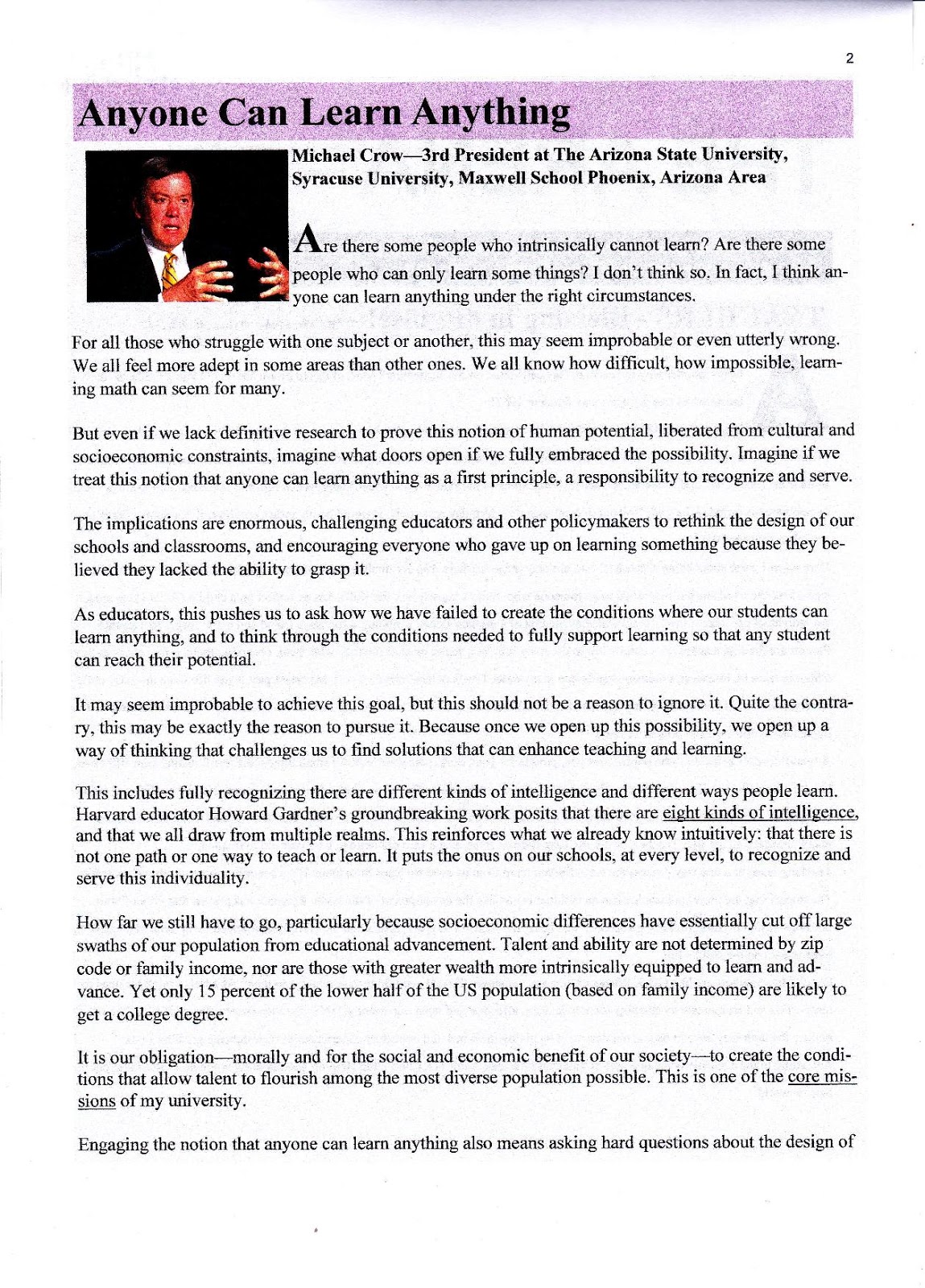
The Arena February 6, 2017 Issue

* Dr Travis Bradberry is one of my influencers in linkedin. He is an accomplished writer who has written books on EQ and also the President at Talent Smart
The purpose of uploading the newsletter to this blog is to minimize the cost of printing
and for others to enjoy reading it online!


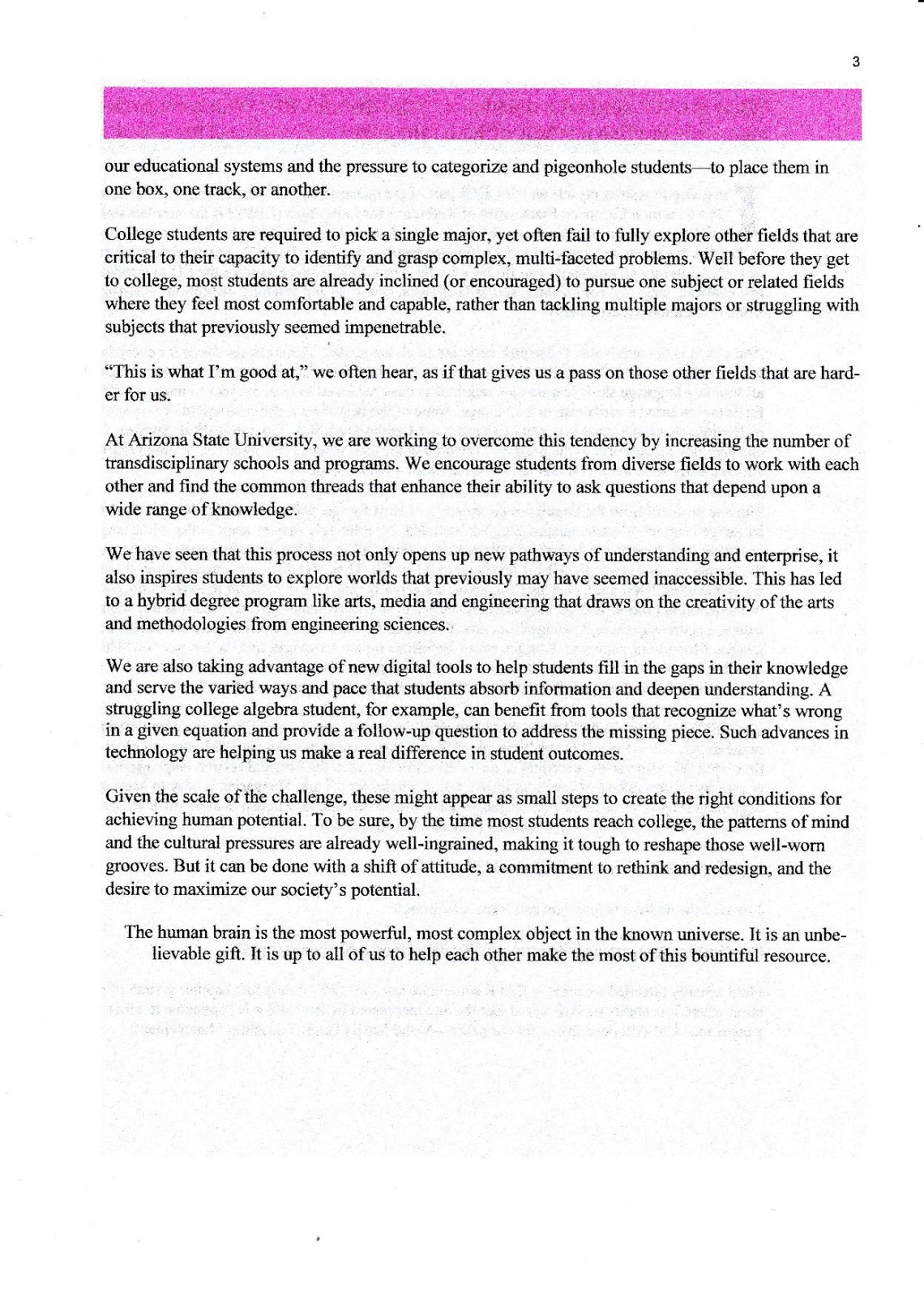
The Second Batch of Material for Professionals in Al-Irshad for Professional Learning Community Programme
The Arena February 13 , 2017 Issue


Dr. David Franklin, CEO of The Principal’s Desk, is an experienced school administrator, education professor, curriculum designer, and presenter. Dr. Franklin has presented at national and international education conferences as is available for school and district professional development sessions.


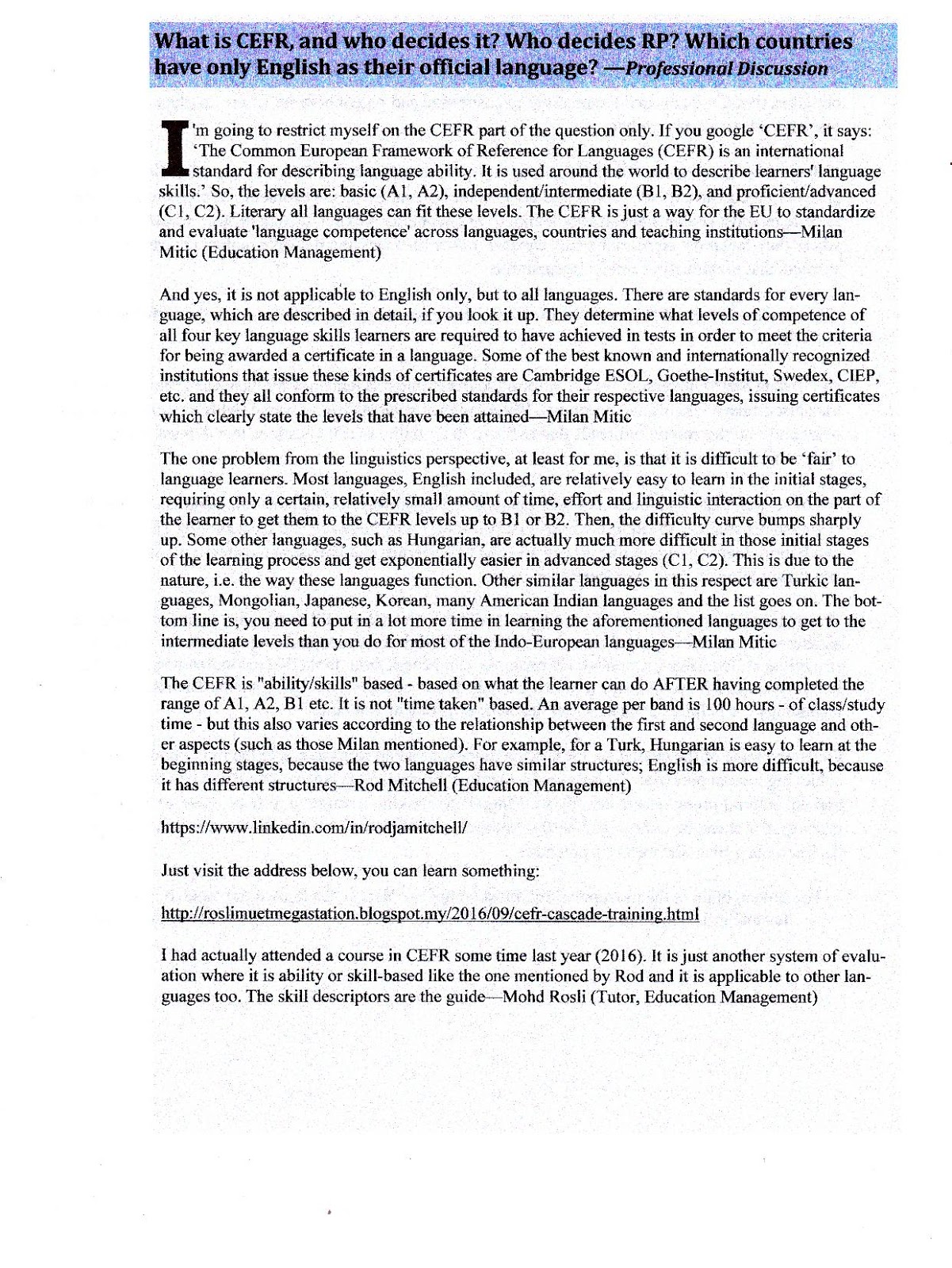
The Arena March 5 Issue


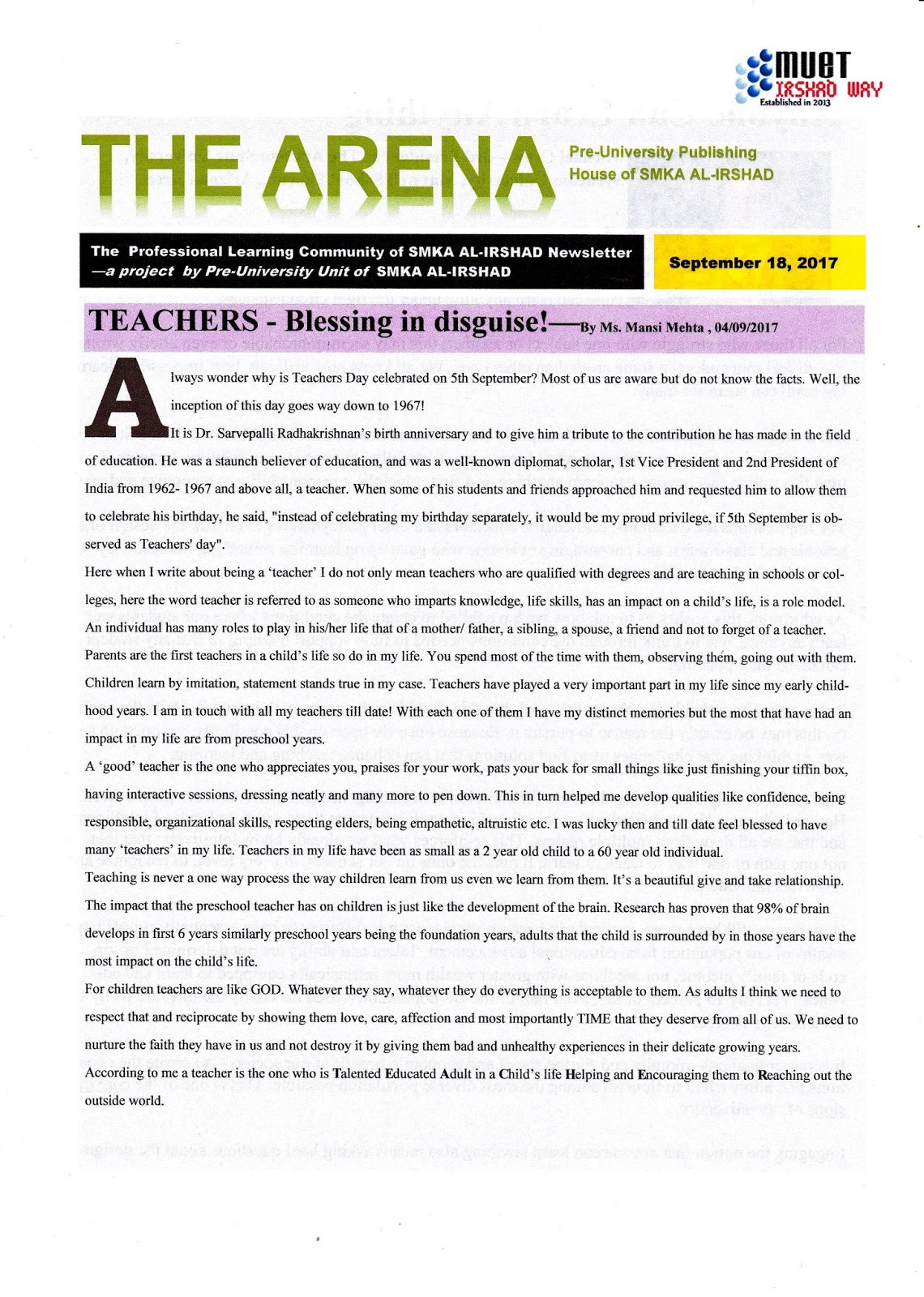
The Arena, September 18 Issue
The production of Arena had been postponed until September due to some
unavoidable circumstances


Saturday, 3 December 2016

How I See the 21st Century Learning

As I See It
 
 
The 21st Century Teaching and Learning style has been the most talked-about agenda globally and Malaysia is no exception.
Our plans and actions are based on the goal. In fact, some countries have been on their way to their destination on 21st Century Education programmes with some adjustments from the errors they have encountered.
Have we started our journey towards the 21st Century Education? Yes, we have. Firstly, we embark on the physical aspect of it for instance, the classroom arrangement. Some logical patterns have been suggested. Then, every school has to set up classrooms of those patterns. The progress is monitored by appointed officers from the ministry and the education department. The enhancement of management sector follows. This has been very much cared about as compared to the methodology of teaching and learning. Numerous paperwork marked the identity of our managerial business, so we take to filing thousands of sheets of it to fulfil the needs of managerial documentation.
The philosophy of 21st Century is created for guidance and revolution follow suit. Factually, there had been revolution in pedagogy since 1984 (my experience). The aspect of C and C (critical and creative thinking) had been emphasized. We are struggling to equip ourselves with the knowledge. Currently, we are implementing H.O.T.S (Higher Order Thinking Skills) which I think is just another name for C and C.


Let us turn the pages of history. Isaac Newton, a scientist had been critical enough to discover the theory of gravitation in 1687 which traced the falling apple story. Newton chose to think about nature’s phenomenon back in 15th century! He later developed the Newton’s Laws of motion. In Malaysian schools, the implementation of Nuffield Science in the lower secondary is to tease the students’ intellectual faculty to think critically and creatively and develop their inquisitive domain. That was carried out more than 40 years ago. So, H.O.T.S. business is just like a sequel to C and C.
Back  in the late 70’s, I was taught the basics of physical geography about factors that determine the climatic of a mass of land among which are distance from the sea, cloud cover, altitude, latitude and aspects; BINGO! I got it! You’ll see that from here, the higher order thinking skills could be established and nurtured. Without basic facts, one could not set up proper thinking activity. The tool to thinking is facts; facts are synthesized during thinking.